The Architecture of Silence:
When Self-Censorship Becomes a Substitute “Criminal Contract”
A reading of the chilling effect of Tunisia’s punitive legal arsenal (2021–2026)
In this article
Introduction: From the “Jailer State” to the “Jailer Citizen”
Historically, the mentality of the Tunisian state in its relationship with the public space reflected a structural ebb and flow: from an authoritarian system in which the state monopolized the space of expression and punished it, to a noisy revolutionary surge after 2011 that turned the state’s role, “in theory and in legislation,” into that of a protector and fence-builder of freedoms. Yet this historical shift ran into an unframed “shock of freedom.” A society that had lived for decades under political and social repression, and under a “draining of sources,” faced an open digital space with no institutional mechanisms of awareness or education, and expression in some of its aspects veered toward insults, slander, and virtual agitation.
Instead of investing, through its institutions (educational, cultural, and legislative), in spreading a culture of responsible expression and legal awareness, the state chose a “policy of reciprocal vindictiveness.” The contagion of tension passed from the virtual street into the corridors of legislation, and the state’s role quickly changed from protection to top-down punishment and prosecution through an arsenal of repressive laws.
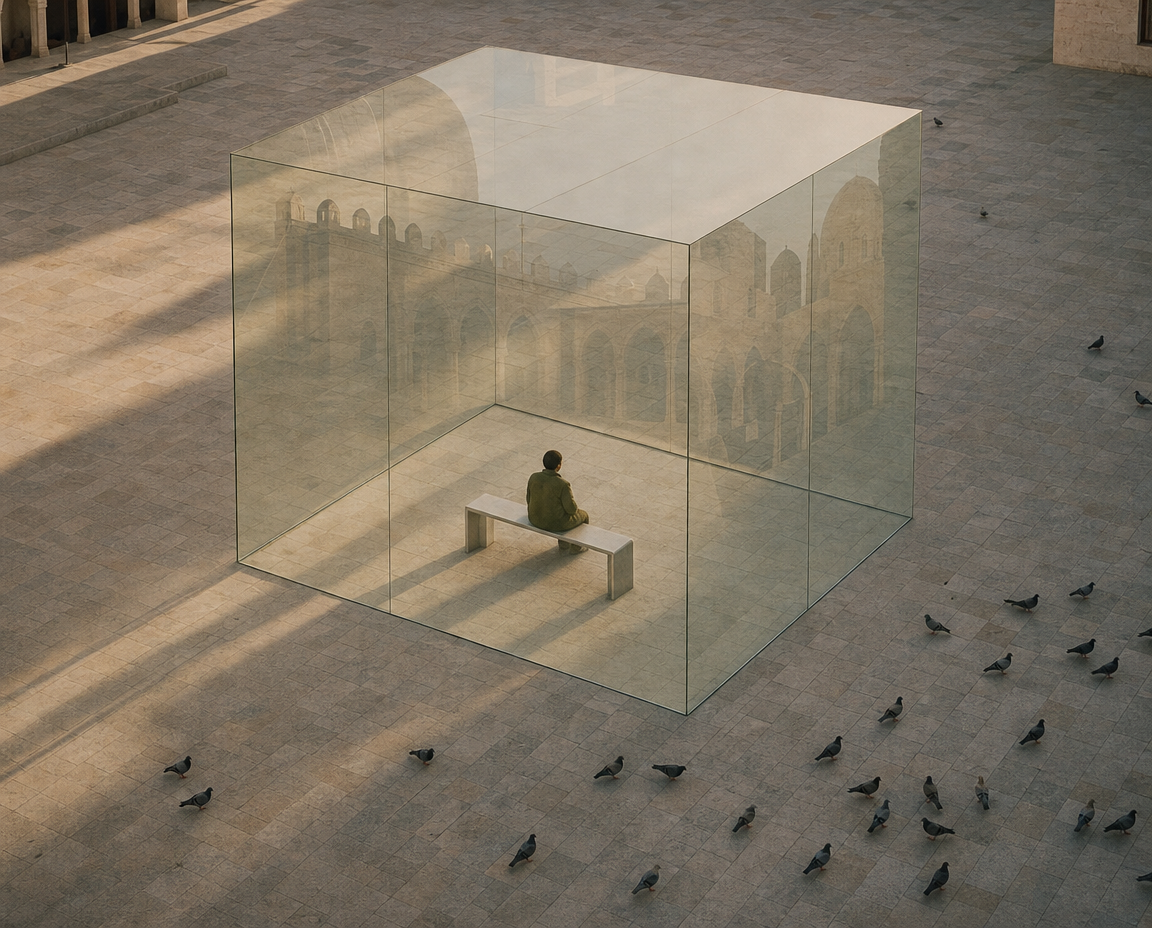
The peak of this trend appeared in the space after 25 July 2021, when prisons were no longer merely concrete walls but, through elastic legislative architecture, became “virtual walls” that the citizen or journalist builds around his own consciousness for fear of punishment. This establishes a more radical paradox: the potential defendant becomes his own jailer and carries out the punishment before the criminal act occurs, through what is known in legal jurisprudence as the “Chilling Effect.” In both cases the citizen remains the weakest and most oppressed party, caught between the hammer of suppressed lawlessness and the anvil of the repressive state.

Axis One: Deliberate Conflict of Laws and Vagueness as a Criminalization Strategy
1. The Unconstitutionality of Decree-Law No. 54 and the Demolition of the Principle of “Proportionality”
Decree-Law No. 54 of 2022 on combating offenses relating to information and communication systems represents the most significant turning point in current Tunisian criminal policy. It collides directly with the constitutional safeguards enshrined in Article 55 of the 2022 Constitution, which requires that restrictions imposed on rights and freedoms be:
- by virtue of a law (not an exceptional executive decree-law);
- necessary in a democratic society;
- proportionate to the interest to be protected, without infringing the essence of the right.
In practice, Article 24 of Decree-Law 54 demolished the principle of “proportionality” entirely, by imposing a prison sentence of up to 5 years and a fine of 50,000 dinars for promoting “fake news” or “attributing untrue matters,” and by doubling the penalty to 10 years if the target is a public official. This punitive tightening, combined with the abolition of the “separation of powers” and the conversion of the judiciary and the legislature into “functions” in the new Constitution, has widened the standards of criminalization, as the status of “public official” has become a “security belt” that prevents any legitimate criticism of the management of public affairs.

2. Legislative Overlap and the Executive Immunization of Power
Decree-Law 54 is complemented by traditional articles of the Penal Code that have been activated procedurally to encircle political criticism:
- Article 67 of the Penal Code: criminalizes committing an “offensive act (amr muhish) against the President of the Republic” (punishable by 3 years’ imprisonment). It is a sweeping concept inherited from history, lacking any precise technical definition.
- Article 128 of the Penal Code: punishes anyone who attributes unlawful matters to a public official connected with his duties without proof (two years’ imprisonment). The danger here lies in shifting the “burden of proof” entirely onto the shoulders of the citizen or journalist. Exposing a suspicion of corruption without holding official documents that are administratively withheld immediately turns the person from a corruption whistleblower into a defendant under Article 128.
This restrictive overlap represents “procedural fraud” that deliberately sidelines the special laws that qualify the general ones, such as Decree-Law No. 115 of 2011 regulating freedom of the press and publishing, which bars custodial penalties in opinion cases, while general punitive texts are applied instead, breaching the established jurisprudential rule: “The specific limits the general.”
The Punitive Arsenal: Many Texts, No Clear Line
The main texts used in opinion and digital-expression cases
Article 24, Decree-Law 54
“Fake news” and “attributing untrue matters”
Article 67, Penal Code
“Offensive act against the President of the Republic”
Article 128, Penal Code
Attributing unlawful matters to a public official without proof
Article 86, Telecommunications Code
“Offense to others” and “disturbing their comfort” over networks
Decree-Law 115 of 2011… sidelined
It bars custodial penalties in opinion cases, yet “the specific limits the general”
Axis Two: The Parallel Arsenal and the Decisions of the Court of Cassation
1. Article 86 of the Telecommunications Code: The Classic Weapon, Renewed
Article 86 of the Telecommunications Code (the law of 2001) stipulates the imprisonment of anyone who “deliberately causes offense to others or disturbs their comfort through public telecommunications networks.” Although the text was historically drafted to combat telephone harassment, judicial application after 2021 widened its scope to include digital posts.
The problem therefore lies in the vagueness of the terms “offense” and “disturbing comfort,” which collides with the principle of “legality of crimes and penalties” enshrined in Article 34 of the Constitution (no penalty except by virtue of a previously enacted text). On the basis of this article, members of parliament, politicians, and activists have been prosecuted, and the law has been transformed from a technical protection tool into a flexible mechanism for re-architecting the digital space and producing silence.

2. Tunisian Jurisprudence: Between Procedural Rigidity and Quashing by the Court of Cassation
Between 2021 and 2026, Tunisian courts experienced a judicial dynamic that reflects the intensity of this legal conflict:
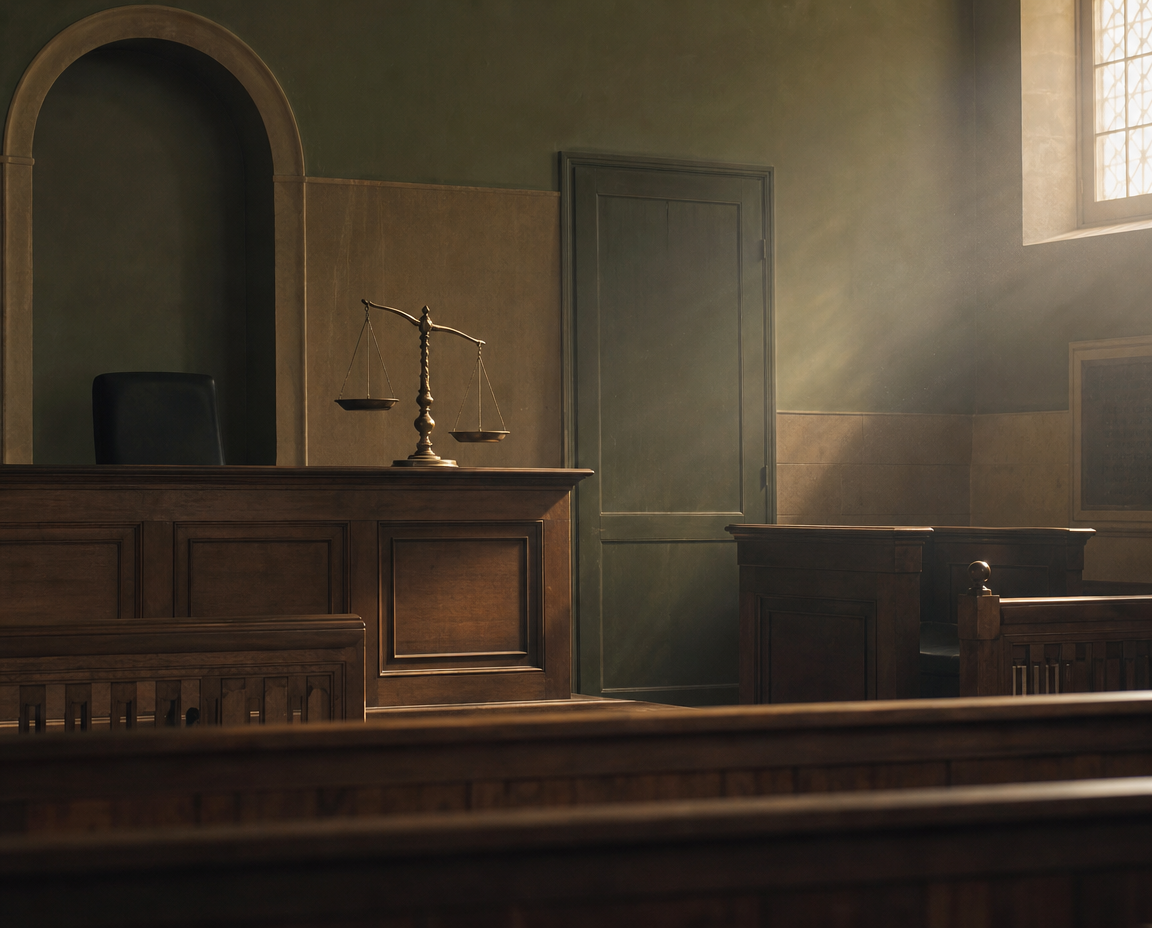
The case of journalist Khalifa Guesmi: He was sentenced on appeal to 5 years in prison in May 2023 on charges of disclosing security information under the anti-terrorism law. The Court of Cassation then intervened on 6 March 2024 and issued a “historic” decision of “quashing and remand,” which led to his final vindication (“dismissal of the case”) by the court of remand in June 2025, enshrining the protection of journalistic sources as an essential condition of media freedom.
The case of journalist Chadha Hadj Mbarek: She faced heavy charges, among them committing an “offensive act against the President of the Republic” and conspiracy, and a first-instance sentence of 5 years in prison was issued against her in February 2025. The Court of Appeal then ruled on 13 January 2026 to reduce the sentence to two years while granting her suspension of execution of the custodial sentence, which allowed her release.
The cases of politicians (the conspiracy and elections cases): The rulings issued against former presidential candidates (such as Ayachi Zammel, sentenced to 12 years in prison on charges of forging endorsements, upheld by the Court of Cassation in February 2026) or against leaders of the political opposition to the regime in the “conspiracy file” (Issam Chebbi, Ghazi Chaouachi, and Jaouhar Ben Mbarek) reflected the transformation of the procedural judicial space into an arena for settling the fallout of the political conflict.
Axis Three: The “Criminal Radar” and the Digital Citizen’s Guide
The repressive laws have produced a sharp split within Tunisian public opinion. A wide wave defended and supported Decree-Law 54, justifying it by the need to put an end to moral anarchy, to cleanse the virtual space of insults, and to protect honor from systematic smear campaigns. In contrast, a massive wave rejected the decree-law and considered it a legislative guillotine whose real aim is to stifle critical voices and empty the political arena of any rational opposition, in addition to founding and entrenching a culture of vindictiveness.
Between these two waves, the Tunisian citizen finds himself in a daily expressive predicament. To avoid this “criminal radar” and to avoid becoming a victim of the law’s chilling effect, what does safe expression look like?
1. Distinguishing Precisely Between Criticism and Insult
Criticism of policies (permitted and constitutional): Focus on criticizing “performance,” “the decree-law,” or “the government program.” This is objective criticism protected by the Constitution and by international standards.
Example: “The economic policy followed has led to a decline in purchasing power and a deterioration of administrative services.”
Insulting persons (criminalized): Avoid entirely addressing the personal self of the official or the citizen with epithets that touch his dignity or honor. Expressions of personal mockery are immediately characterized as an “offensive act” or as “offense to others” over networks.


2. Managing the “Burden of Proof” When Exposing Abuses
If you want to talk about a suspicion of corruption inside a public service, avoid categorical formulations and direct accusations by name unless you hold conclusive, protected official documents. Use alternative wording such as:
“We call on the relevant authorities to open an investigation into the circumstances and procedures of deal X, in order to ensure the principle of transparency.”
This approach moves the discourse from the category of “false claims and attributing untrue matters” (Article 24 of Decree-Law 54) to the category of “citizens’ demand for oversight.”
3. Verify Before Pressing the “Share” Button
Tunisian courts characterize the republishing of false or violating posts (even if you are not the original author) as an intentional contribution to circulating fake news. Remember: you are legally responsible for the content of your page and what you share. Before publishing, confirm with official sources or accredited agencies.
Before You Press “Post”: What Does Safe Expression Look Like?
General clarification, not legal advice
Policies, decisions, programs
not the person’s dignity
instead of accusing by name
without official documents
You are responsible
for your page’s content
Axis Four: The Institutional Price and the Erosion of Social Peace
The documented statistical indicators for the period between 2021 and 2026 show a direct correlation between the overreach of repressive legislation and the decline of the state’s vital indicators:
The Institutional Price, in Numbers
Vital indicators in decline
Press freedom: from 73rd to 137th
Tunisia’s world rank (RSF): 73rd in 2021 (first in the Arab world), 121st in 2023, 137th in 2026
Civil society: from 27,000 to 1,500
Associations monitoring the electoral process: 27,000 in 2014, 17,000 in 2019, 1,500 in 2024
Turnout: from 69% to 8.8%
Participation in legislative elections: 69% in 2014, 43.9% in 2019, 8.8% in 2024
Judiciary: 57 judges dismissed
Under Presidential Decree No. 516 of 2022, after the Supreme Judicial Council was dissolved
The death of the rational deliberative space
The state loses its early-warning system, and the media becomes a one-way channel
These indicators reveal a steep institutional price. Self-censorship did not only silence opponents; it struck the “judicial structure” itself, after the dissolution of the Supreme Judicial Council and the dismissal of 57 judges under Presidential Decree No. 516 of 2022, which created a climate of fear within the judicial service itself.
The direct result is the “death of the rational deliberative space.” When the academic, the researcher, and the expert choose silence to avoid prosecution, the state loses the early-warning system for its policies, and the media becomes a one-way channel.
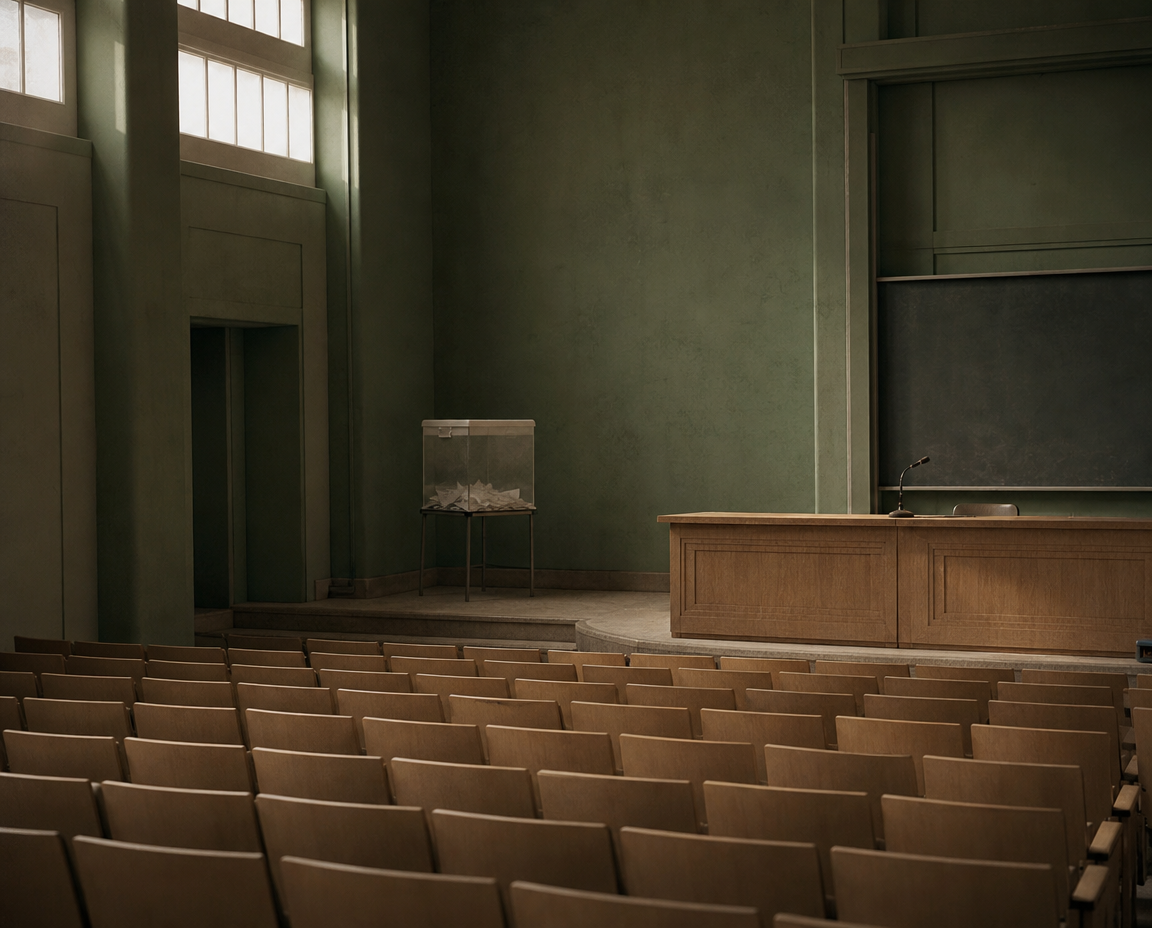
This sharp contraction in expression explains, doctrinally and structurally, the collapse in rates of political and electoral participation (down to 8.8%), since silence and fear produce a complete disengagement from public affairs and an erosion of citizenship.
Conclusion: Saving Social Peace and Governing the Text
The self-censorship that dominates the Tunisian public space today is not evidence of the law’s effectiveness or of the establishment of public order, but a stark indictment of its moral and constitutional legitimacy. When silence becomes the citizen’s only rational choice for protecting his freedom from procedural overreach, texts lose their character as a “social contract” and turn into “tools of coercive subjugation.”
On the basis of this legal diagnosis, saving Tunisia’s social peace and rebuilding trust between citizen and state requires urgent technical and organic conditions:
1. Abolition of Decree-Law No. 54 of 2022: because of its explicit unconstitutionality and its collision with Article 55 of the Constitution, its demolition of the principle of proportionality and necessity in a democratic society, and its transformation from a text for combating cybercrime into a sword hanging over matters of opinion and digital expression.
2. Reviving the Independent High Authority for Audiovisual Communication (HAICA): and activating its independent regulatory role as the safety valve for protecting pluralism and guaranteeing media freedom, far from direct dictates and from institutional censorship directed by the organs of the state and its executive power.
3. Unifying and restructuring legislation into a “legal text on freedom of expression and publication”: gathering all legal texts relating to freedom of expression, writing, and publishing in a clear, precise, and direct form that does not admit interpretation or conceptual expansion of the “acts of criminalization.” This technical measure aims to end the scattering and vagueness of texts among decree-laws, articles of the Telecommunications Code, the Penal Code, and the Code of Military Pleadings and Penalties, ensuring legal certainty and protecting the public space from the deliberate overlap between texts.
An idea that is suppressed out of fear does not die; it turns into a muffled congestion that threatens to explode outside the channels of the state. Dismantling the structure of silence today is the first step toward protecting the future of the public service and of peaceful coexistence in Tunisia.

Key Takeaways
From the “jailer state” to the “jailer citizen”
After 25 July 2021, prisons became not only concrete walls but “virtual walls” the citizen builds around his own consciousness, punishing himself before any act occurs.
Decree-Law 54 and proportionality
The decree-law collides with Article 55 of the Constitution, which requires restrictions to be set by law, necessary and proportionate, while Article 24 turned “public official” status into a shield against criticism.
An overlapping arsenal of vague terms
Articles 67 and 128 of the Penal Code and Article 86 of the Telecommunications Code are applied instead of Decree-Law 115 on press freedom, breaching the rule that “the specific limits the general.”
Courts between rigidity and quashing
From the quashing of Khalifa Guesmi’s sentence and his acquittal, to the reduced sentence of Chadha Hadj Mbarek, to heavy rulings against politicians, the courts mirror the intensity of the legal conflict.
Criticize performance, not persons
Criticizing policies is permitted and constitutional; epithets that touch a person’s dignity are characterized as an “offensive act.” Asking for an investigation is safer than accusing by name without documents.
You are responsible for what you share
Republishing a false post can be treated as an intentional contribution to spreading fake news, even if you did not write it. Checking official sources is essential before sharing.
A steep institutional price
Press freedom rank fell from 73rd to 137th, election-monitoring associations shrank from 27,000 to 1,500, and legislative turnout collapsed from 69% to 8.8%.
Dismantling the structure of silence
The article proposes repealing Decree-Law 54, reviving HAICA, and unifying the texts into a clear law on freedom of expression, because an idea suppressed out of fear does not die.