
The Chemistry at Work in the Soil, Water, and the Human Body: An Analysis of the Deep-Seated Structural Crisis of Agricultural Pollution in Tunisia
Analytical Axes
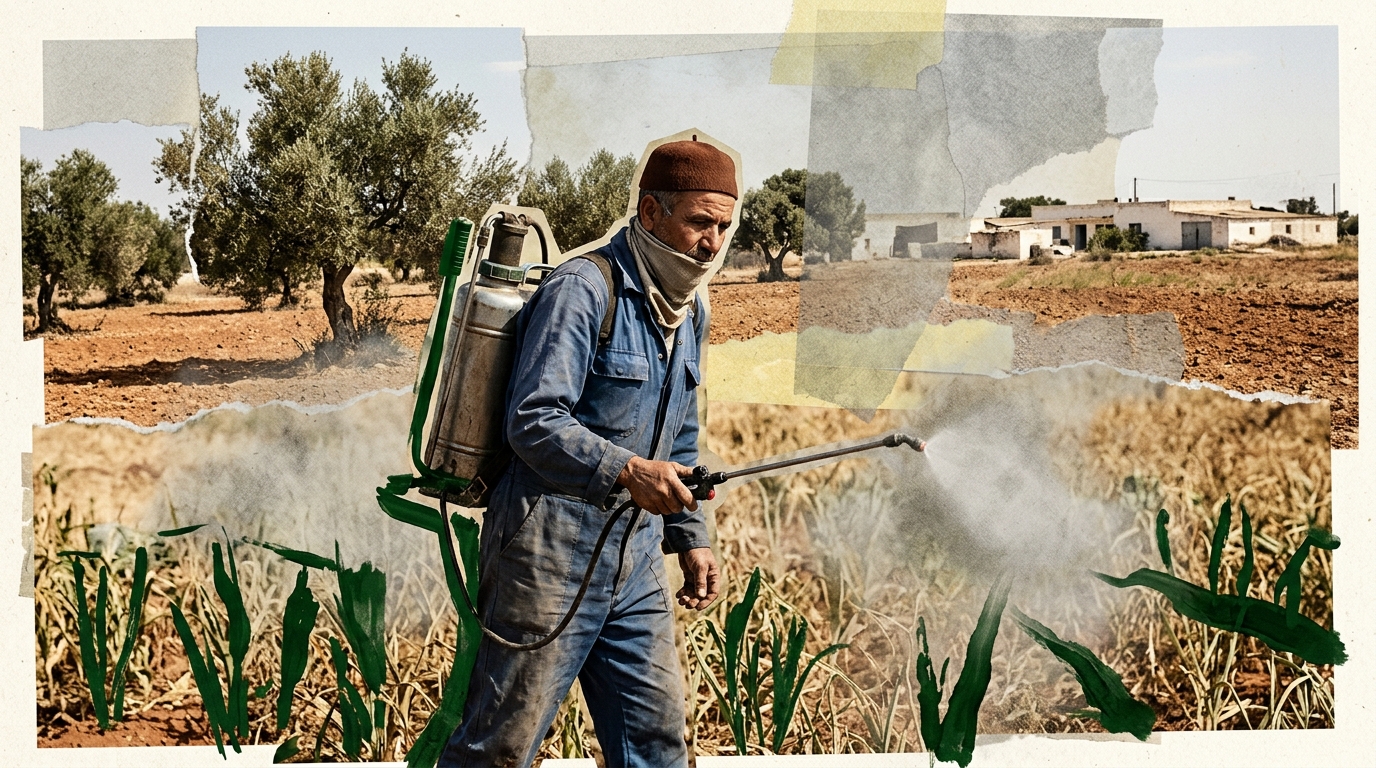
When a Tunisian farmer sprays pesticide on his crops at the break of each new day, he usually doesn’t think about the organophosphates seeping into the soil, nor about the groundwater that will carry them to reservoirs kilometers away; he doesn’t consider that, according to estimates by the National Agency for Environmental Protection, half of this substance will not be used in accordance with best practices. And he may not even know that the substance he is spraying is on a list of 44 highly hazardous active ingredients—banned in European markets but fully authorized in the Tunisian market.
This daily scene, repeated in hundreds of fields from the north to the south of the country, encapsulates an environmental, health, political, and economic crisis that still lacks genuine government recognition and a response commensurate with its scale.
In a study published by the Social Accountability Association in collaboration with the Friedrich Naumann Foundation, titled “Agricultural Pollution in Tunisia: Between Legal Stagnation and Shifts in On-the-Ground Reality,” the authors use data and analysis to shed light on a phenomenon that has become a multidimensional structural crisis.
The Numbers Don’t Lie: From Pesticide Imports to Water Pollution
To understand the scale of the issue, one figure suffices: Tunisia imported approximately 4,161 metric tons of pesticides in 2022, according to the “Pesticide Atlas” published by the Heinrich Böll Foundation. This figure far exceeds the officially declared consumption, estimated at around 985 metric tons according to the Food and Agriculture Organization’s database, which reveals, according to the study, a significant gap between official statistics and the reality on the ground, which can be attributed to weak monitoring systems as well as the growth of parallel trade through informal distribution channels.
Gap Between Declared and Imported Pesticides (2022)
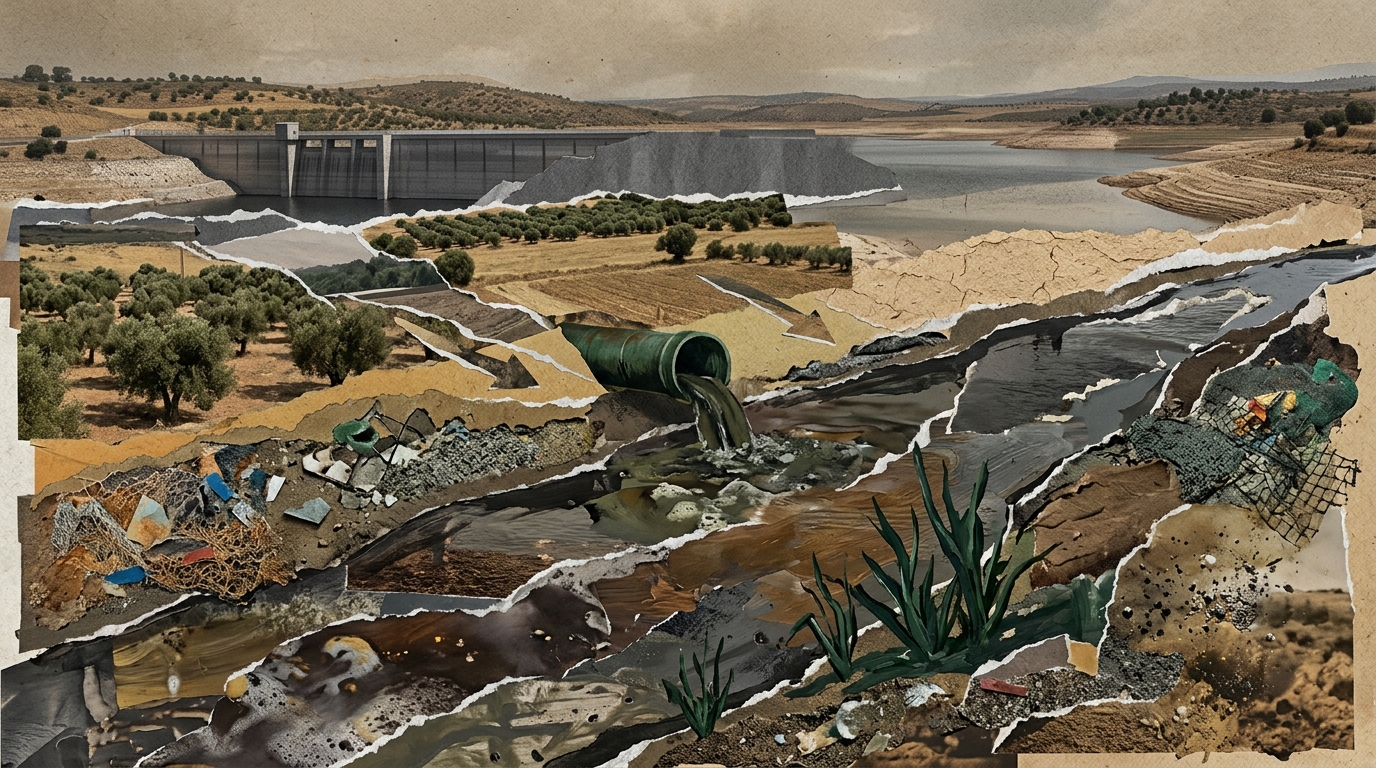
InteractiveThese quantities do not remain confined to the fields; surface runoff and seepage through the soil carry them toward both mountain and groundwater basins.
Based on a field study conducted at the Higher School of Agriculture in El Kef in collaboration with Italy’s Catholic University and the European Observatory for Sustainable Agriculture (OPERA), the study documents the presence of 29 active ingredients in the waters of northern Tunisia, with the near-constant presence of pesticides such as glyphosate and simazine. Levels of the active ingredient linuron were also detected in the water reaching 7.8 micrograms per liter—78 times the maximum limit permitted in Europe.
However, what is most telling is the dire state of the Majarda Valley, which accounts for approximately 37% of Tunisia’s total surface water, irrigates more than 80,000 hectares of agricultural land in northwestern Tunisia, and provides drinking water to more than one-third of the country’s population, primarily in the northern governorates and the Greater Tunis region.
Despite its vital importance to agricultural activity and drinking water supply, this valley is under complex environmental pressures from industrial discharge, pesticide-laden agricultural runoff, and untreated sewage, all of which threaten its water quality and its role in safeguarding national water security.
The Agricultural Revolution: From Self-Sufficiency to Depletion
Farming has not always been characterized by the kind of intensive production that is largely geared toward exports and agro-industrial processing, as is the case today.
The study traces a historical trajectory extending from subsistence farming based on self-sufficiency in ancient times, through the capitalist transformations since the sixteenth century, to the era of globalization, where agricultural production has become linked to global markets and multinational corporations that control seeds, fertilizers, and distribution chains.
This radical transformation has given rise to a model of intensive agriculture that relies on the heavy use of chemical inputs—a phenomenon the study terms the “chemical vortex.”
Economic Productivity of Water by Sector (USD / m³)
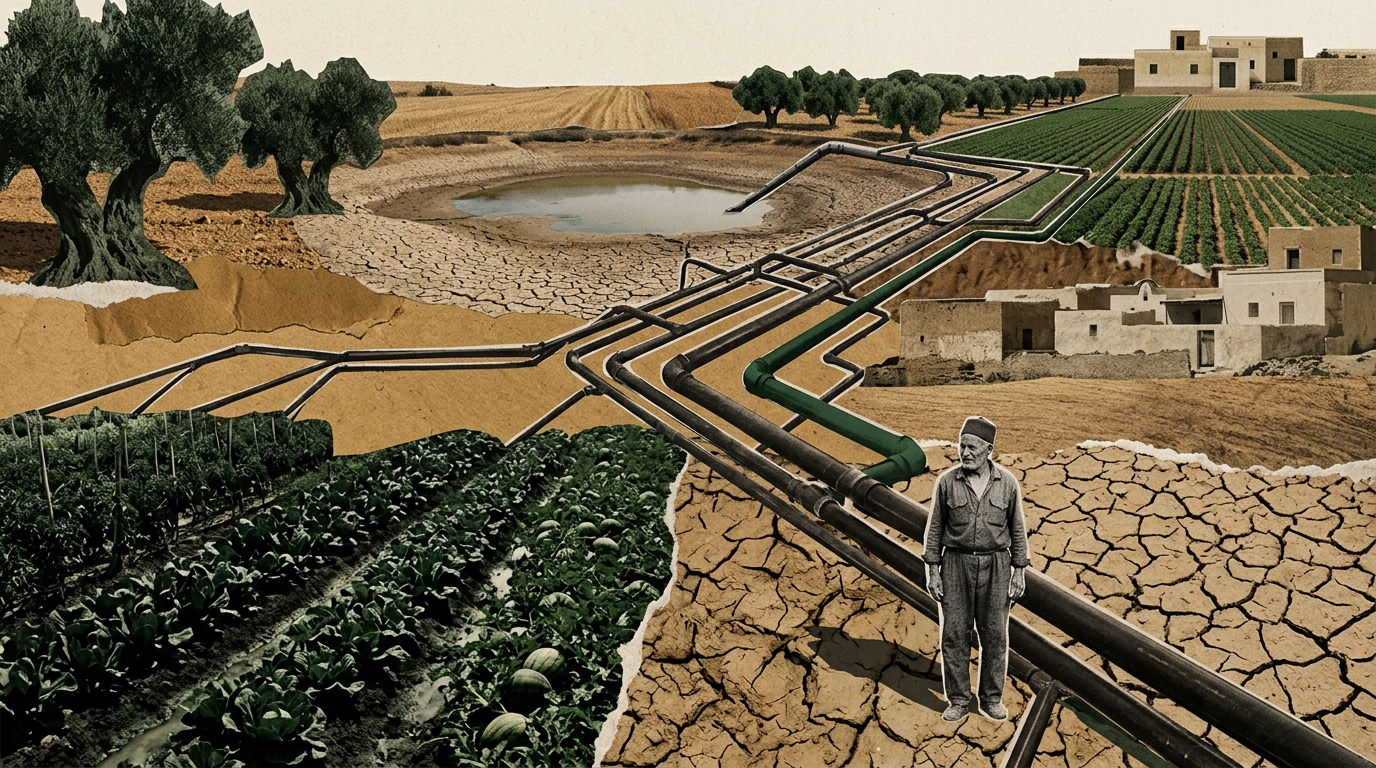
InteractiveIn Tunisia, this reality is reflected in a stark economic fact: official figures indicate that water productivity in agriculture does not exceed $0.27 per cubic meter, compared to $225 in industry and $32 in services. At the same time, agriculture consumes the lion’s share of water resources, at a rate of 2,722 million cubic meters in 2020, even though the country is classified among those suffering from water stress or water scarcity, compounded by the loss of massive quantities of drinking water due to the deterioration of distribution networks; this loss is estimated at approximately 40% of the total water distributed through those networks.
Furthermore, successive Tunisian governments since the 1980s have pursued an export-oriented agricultural policy, with European countries accounting for approximately 70% of Tunisia’s total agricultural exports. This raises two fundamental and contradictory issues: the first relates to the export of water through agricultural products that consume large amounts of water in a country suffering from water stress, and the second concerns the competitiveness of Tunisian products, particularly given that the European market imposes strict standards regarding the use of certain pesticides and the levels of chemicals in products intended for sale in its markets.
From Soil to Body: The Invisible Health Impact
What sets this study apart from others is its shift from an environmental description to an evidence-based health assessment. Based on a clinical study conducted at Farhat Hached Hospital in Sousse, it appears that 130 deaths from “pesticide poisoning” were recorded between 1991 and 2009, representing 41.9% of all fatal poisoning deaths during that period.
Demographics of Fatal Pesticide Poisonings (Farhat Hached Hospital 1991-2009)
InteractiveAmong the poisoning cases, 72% of the victims were from rural areas, 61.5% were unemployed, and 62% were women. Most significantly, the data reveals that 92.3% of these deaths occurred in the context of suicide, meaning that pesticides have transformed from a tool of agricultural production into a ready-made means of death in contexts marked by social vulnerability, poverty, and unemployment.
Health Consequences & Lack of Protection Among Farm Workers (Sample: 142 Workers)
InteractiveAs for chronic occupational exposure, an international scientific study involving 142 rural workers documented that 66.2% of them suffer from frequent headaches, and 58.4% from eye irritation, in addition to muscular, respiratory, digestive, and skin disorders; moreover, blood tests revealed a significant decline in red blood cell and platelet counts among exposed workers—an objective biological indicator that goes beyond mere symptoms to demonstrate real, cumulative harm resulting from exposure to pesticides and chemical fertilizers.
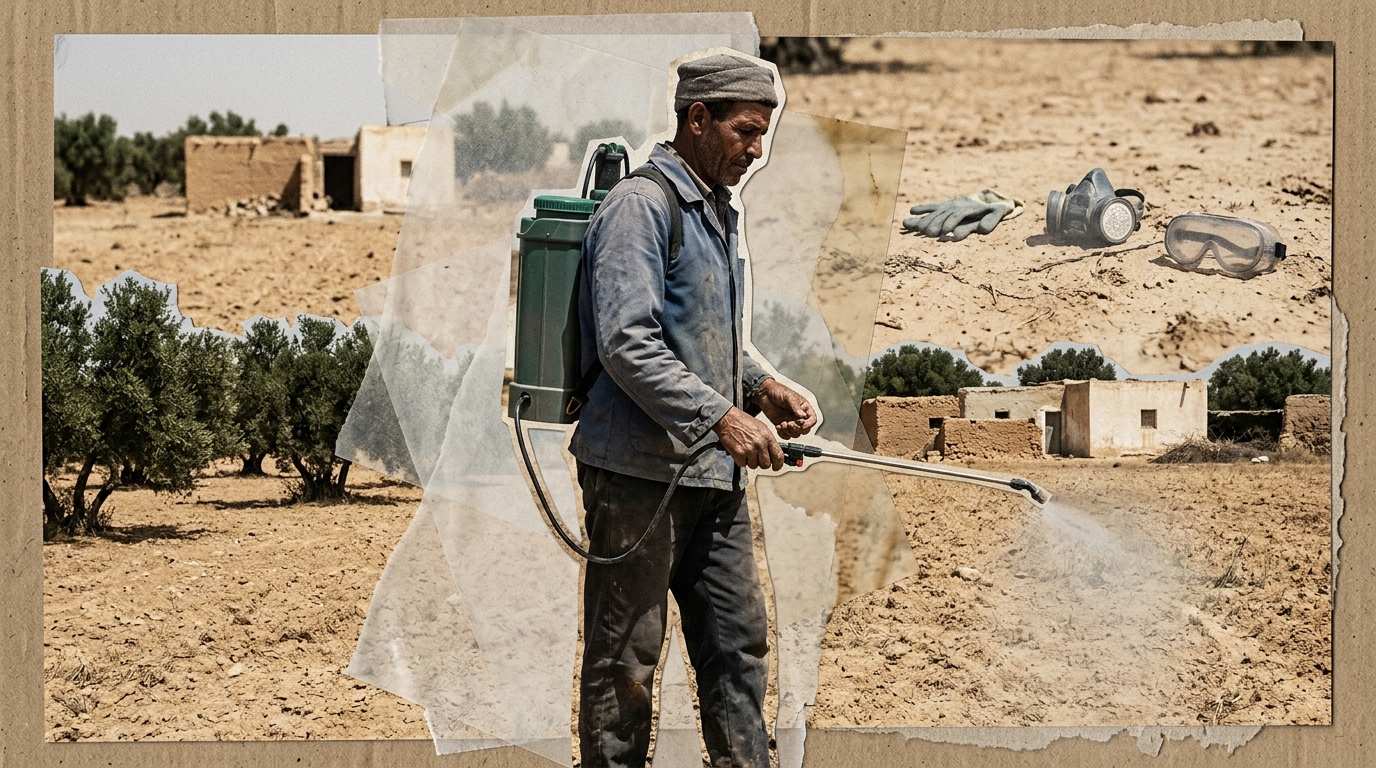
This is reinforced by the fact that 48.6% of these agricultural workers do not use any personal protective equipment, 71.1% are not even aware of what such equipment is, and 96.5% receive their instructions on pesticide use from the pesticide sellers themselves rather than from specialists.
Legal Framework: Scattered Provisions and Weak Enforcement
The study acknowledges the existence of a broad legislative framework that includes the Water Code of 1975, the 1988 Environmental Protection Act, the 1996 Waste Management Act, and Law No. 25 of 2019 on Food Safety, in addition to constitutional provisions enshrining the right to water and a healthy environment.
However, a rich legislative framework does not necessarily imply effectiveness, as environmental impact studies often devolve into routine administrative procedures lacking in-depth scientific analysis, and civil liability mechanisms face the difficulty of proving causation in the context of widespread and indirect pollution; criminal liability, meanwhile, is rarely enforced due to the difficulty of proving the mental element in pollution crimes.
Furthermore, according to the same study, Tunisia relies more on the traditional precautionary principle than on the precautionary principle, which permits intervention even in the absence of conclusive scientific certainty—a principle now adopted by several European and even Asian legal systems.
Agricultural pollution in Tunisia is not an isolated sectoral crisis; it is an expression of a dysfunctional relationship between humans and their natural resources, fueled by economic dependence on imports, weak governance, inadequate oversight mechanisms, and social fragility—the costs of which are borne by the most vulnerable groups. Conversely, while large agricultural companies—or what are referred to as “agricultural investors”—benefit from a short-term increase in production, the community—especially rural communities—bears the health, environmental, and economic costs, which remain largely invisible in official records.
Does Tunisia have the political will necessary to build a sustainable agricultural model that balances the demands of production with those of sustainability, before its natural resources and their productive capacity are depleted?
